The Rhizome Vault
Five Turmeric Varieties
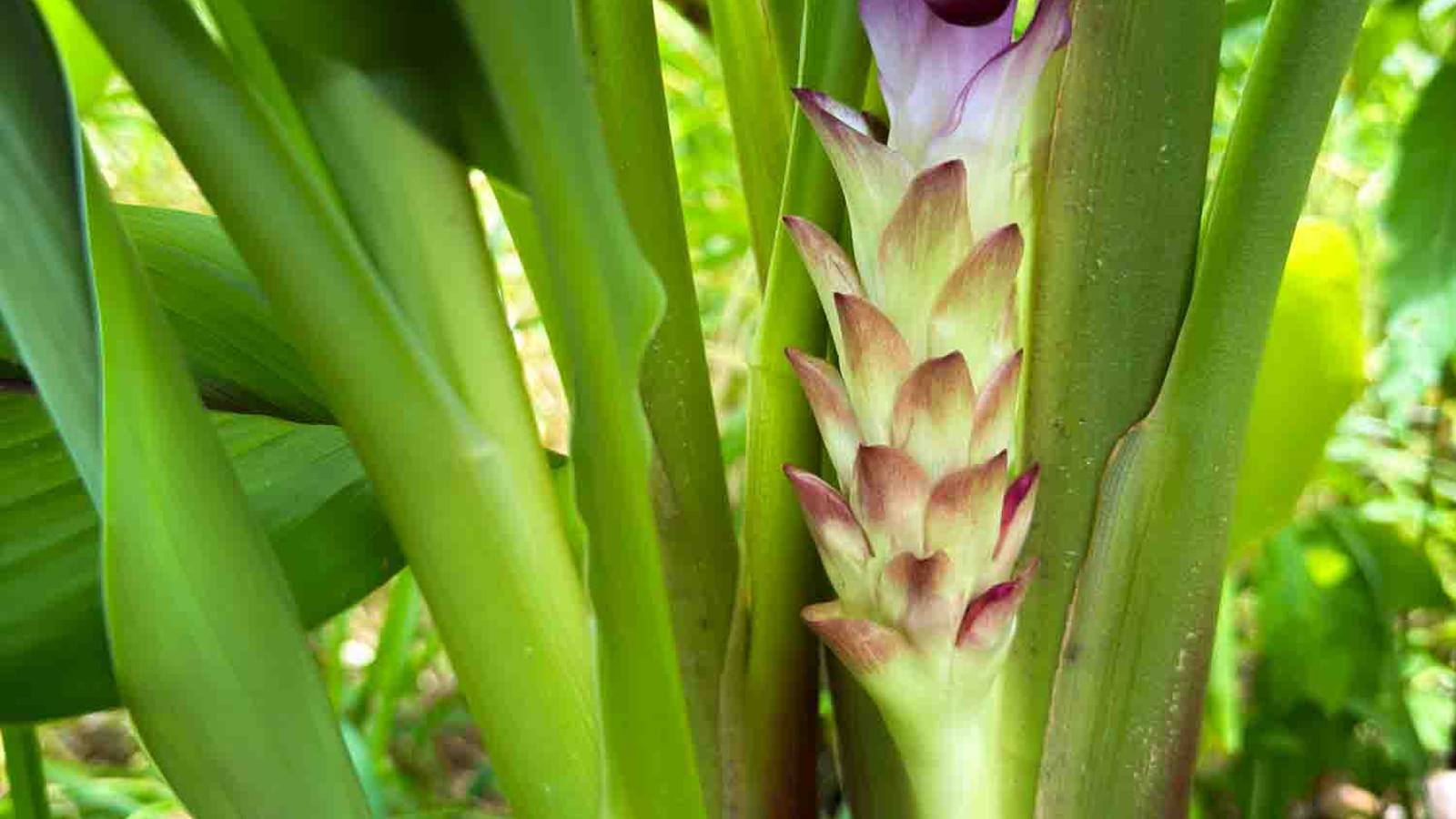
Most people have access to one type of turmeric — yellow powder from a jar. Moody Grove grows five distinct Curcuma species, each with a different internal color, a different compound signature, and different traditional applications. Together they cover a pharmacological range no single variety can match.
5
Curcuma Species
Yellow · Black · Blue · White · Green — each a different internal color and compound profile
Why variety matters
Yellow turmeric's curcumin is well studied. But Black turmeric's camphor-rich essential oils, White turmeric's curcumenol (a different sesquiterpene entirely), and Mango Ginger's amadaldehyde represent compound classes that curcumin research doesn't cover. Blending varieties in the cup gives you phytochemical breadth that no single-origin turmeric product delivers.
Yellow Turmeric
Curcuma longa · Standard
The anchor. Curcumin (3–5% of dry weight) is one of the most-studied natural anti-inflammatory compounds — inhibits NF-κB, COX-2, and a cascade of pro-inflammatory cytokines. Warm, earthy, peppery. The base for most apothecary brews.
Key compounds: curcumin, bisdemethoxycurcumin, ar-turmerone · Boost absorption: always pair with black pepper (piperine +2000%) and a fat
Black Turmeric
Curcuma caesia · Rare
The rarest in the collection — bluish-black flesh inside. High anthocyanin content (same pigment family as butterfly pea) plus camphor, ar-turmerone, and (Z)-ocimene. Studied for anti-ulcer, neuroprotective, anticancer, and antidiabetic properties. Reverentially used in Indian Ayurveda and tribal medicine.
Key compounds: anthocyanins, camphor (28%), ar-turmerone, bisacurone · Use sparingly — potent, complex aroma
Blue Turmeric
Curcuma caesia / aeruginosa · Rare
Related to Black turmeric but with a distinct blue-grey interior hue. Essential oils lean toward anti-inflammatory sesquiterpenes. Traditional Ayurvedic use for joint pain, respiratory conditions, and as a nerve tonic. Visually striking when grated — the blue color fades with heat.
Key compounds: sesquiterpene ketones, germacrone, camphor · Best used fresh in cold brew to preserve color
White Turmeric
Curcuma zedoaria · Zedoary
White to pale cream flesh, camphor-forward aroma. Star compound is curcumenol — a sesquiterpene with anti-tumor (especially liver), antifungal, and liver-protective properties not found in yellow turmeric. Also strongly antimicrobial against Candida and Aspergillus. Traditional digestive and circulatory herb in TCM and Ayurveda.
Key compounds: curcumenol, furanodienone, zederone · Distinct from other Curcuma — different mechanism, different target
Green Turmeric
Curcuma longa variant / early harvest
Green-fleshed turmeric — either a specific green-interior cultivar or Curcuma longa harvested before the rhizome fully matures. Young rhizomes carry a fresher, more citrus-forward volatile oil profile and higher moisture content. Milder curcumin level than mature yellow, but strong in fresh aromatic turmerones. Excellent raw in cold brew.
Use fresh: thin-slice into cold brew for a lighter, more aromatic turmeric profile. Not ideal for drying — the green color comes from chlorophyll that breaks down with heat.