Ormond Beach, Florida · Zone 9b/10a · Est. 2024

Grow Different.

Syntropic food forest — stacking species, building soil, accelerating succession.

Scroll
70+ Species Tropical & subtropical food plants
330 Plants in Ground From rhizome to emergent canopy
7 Forest Layers Emergent to root zone
19 Months Established Planted December 2024 — and counting
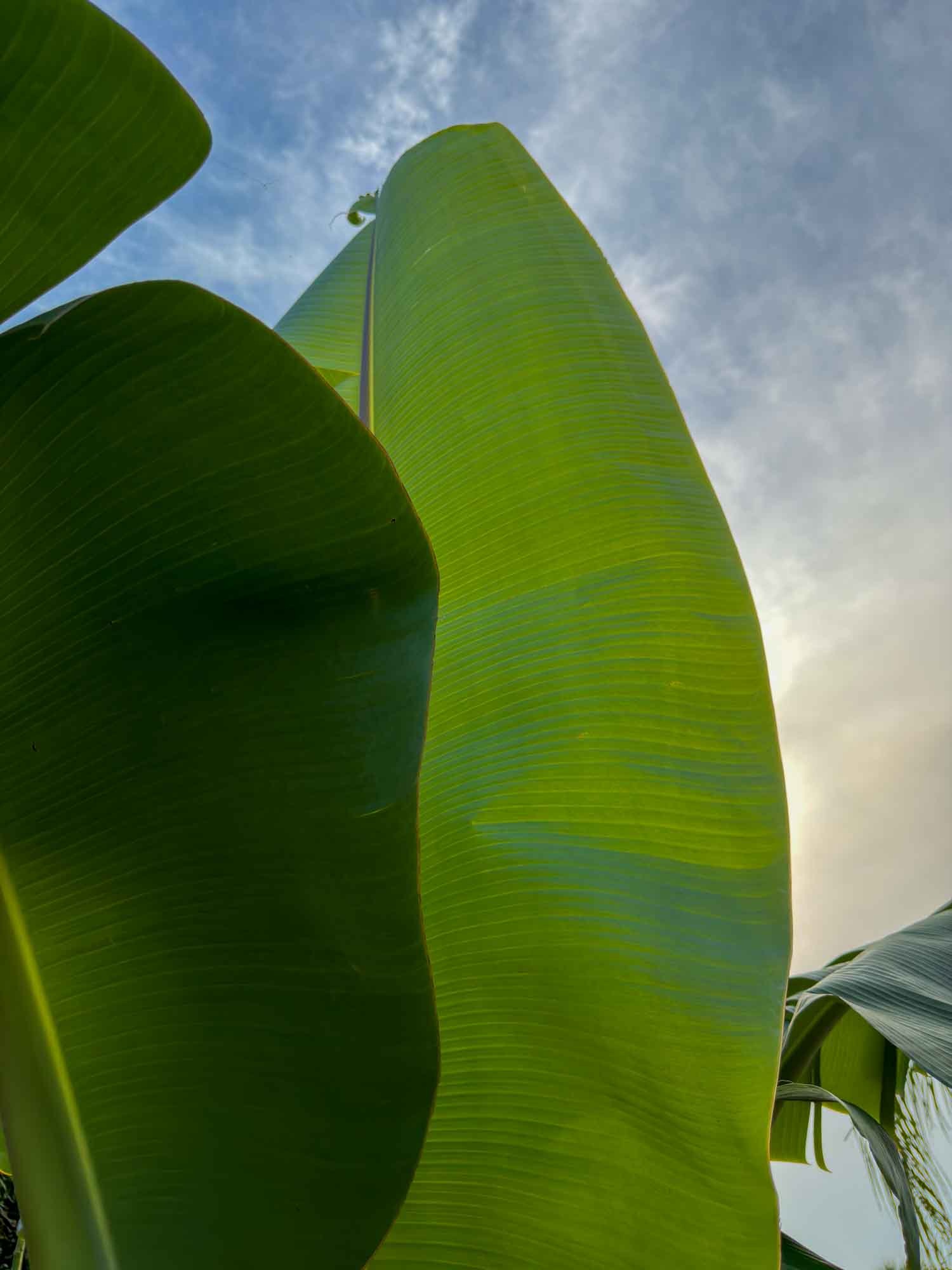
The grove speaks a language older than agriculture. Cavendish banana stalk · Moody Grove · July 2026
The Living Registry

Every Species, Every Role

The complete grove registry — browse by forest layer, function, or name. Gold dots mark what's in harvest right now. Click any card for full details.

Every species earns its place. Hive inspection · Moody Grove · May 2026
Grove Map

The Grove in Space

GPS-calibrated aerial — March 7 2026. Hover or tap pins to explore zones and plant guilds.

Moody Grove aerial

Two datasets, one grove — why the counts differ

The registry (Plants section) aggregates by species with total counts. The map pins individually-notable specimens — cultivars, freeze survivors, new plantings — not every plant. A registry row of 32 bananas is one belt of pins on the map; a pin can record specimen-level detail (Mango Glenn vs. Carrie vs. a lost Nam Doc Mai) that the registry rolls up into a single "Mango" row. The two are linked by plant name, not a 1:1 count.

Grove aerial
JSON copied to clipboard ✓
Succession, Witnessed

The Same Yard

Drag the handle. On the left, 2020 — a St. Augustine lawn. On the right, 2026 — seventy species in seven layers.

The grove in July 2026 The yard in 2020
2020 · Lawn 2026 · Food Forest

Six years between photographs — but the grove itself is only 19 months old.

Nineteen months from lawn to fruit. Blue Java banana, first full raceme · Moody Grove · July 2026
Harvest Calendar

What's Yielding When

Peak harvest windows across the grove. Moody Grove, Ormond Beach FL.

Forest Architecture

7 Vertical Layers

From emergent canopy to underground roots — every layer is occupied and productive.

Plant Guilds

How Plants Support Each Other

Each guild is a team — center tree, nitrogen fixers, pest deterrents, living mulch, and pollinators working together.

Succession Timeline

From Bare Soil to Climax Forest

Moody Grove is in active accumulation — the system is accelerating toward self-management.

A place to sit inside something alive. Teak lounge · Moody Grove · July 2026
Site Intelligence

The System

29.29°NOrmond Beach, FL
4 minWalk to Atlantic
265Sunny Days / Yr
50"Annual Rainfall
9b/10aUSDA Zone
10 ftElevation

Shannon diversity (H′) measures how evenly life is spread across species — a monoculture lawn scores near zero, while typical ecological communities fall between 1.5 and 3.5; values above ~4 are rare, reached only in the most species-rich tropical forests.7 Computed live from the grove registry.

Diversity methodology & limitations

Formula. Shannon index H′ = −Σ pi ln(pi), where pi is each taxon's share of all counted individuals. Pielou's evenness J = H′ / ln(S), where S is the number of taxa. Both are computed live from the registry each page load.

Unit of analysis. H′ is calculated over registry rows, not verified biological species. Each row is treated as one taxon and weighted by its individual count.

Known limitation — understated richness. Seed-mix rows are each counted as a single taxon, even though a blend may contain 12–27 labeled species. This understates true species richness and slightly compresses H′. Genus-level rows (e.g. Musa spp.) are likewise one taxon. The figure is an honest index of the registry as structured, not a field-verified species census.

The Place

Ormond Beach, FL

  • Ormond Beach, Florida — coastal residential
  • USDA Zone 9b/10a — avg winter low 25–30°F, rarely below 28°F
  • 4-minute walk to the Atlantic Ocean
  • ~7,000 sq ft growing area
  • Elevation: ~10 ft above sea level
  • Soil: Sandy coastal loam, well-drained, pH ~6.5–7.0

Sun & Solar Geometry

Light Architecture

  • Summer solstice sun angle: ~84° (nearly overhead)
  • Winter solstice sun angle: ~37° (low southern arc)
  • Average 265 sunny days per year
  • N–S row orientation maximizes photosynthesis for every plant in a row
  • Morning sun from east benefits hammock area
  • Bamboo windbreak on west boundary buffers afternoon heat

Ocean Influence

Coastal Moderation

  • Atlantic Ocean — a 4-minute walk east — prevents hard inland freezes
  • Sea breeze cools grove 3–5°F vs. inland in afternoons
  • Ambient humidity 70–80% avg benefits tropical plants
  • Bamboo windbreaks buffer salt air from east
  • Jan/Feb 2026 freezes were anomalous arctic air overrides

Climate & Rainfall

Seasonal Rhythms

  • Annual rainfall: ~50 inches
  • Rainy season: May–October — 60% of annual rain
  • Dry season: November–April — irrigation supplementation needed
  • Hurricane season: June–November — bamboo windbreaks serve double duty
  • Average frost days: <5/year, typically December–February
  • Last frost average: February 1

The Decomposer Layer

Life in the Mulch

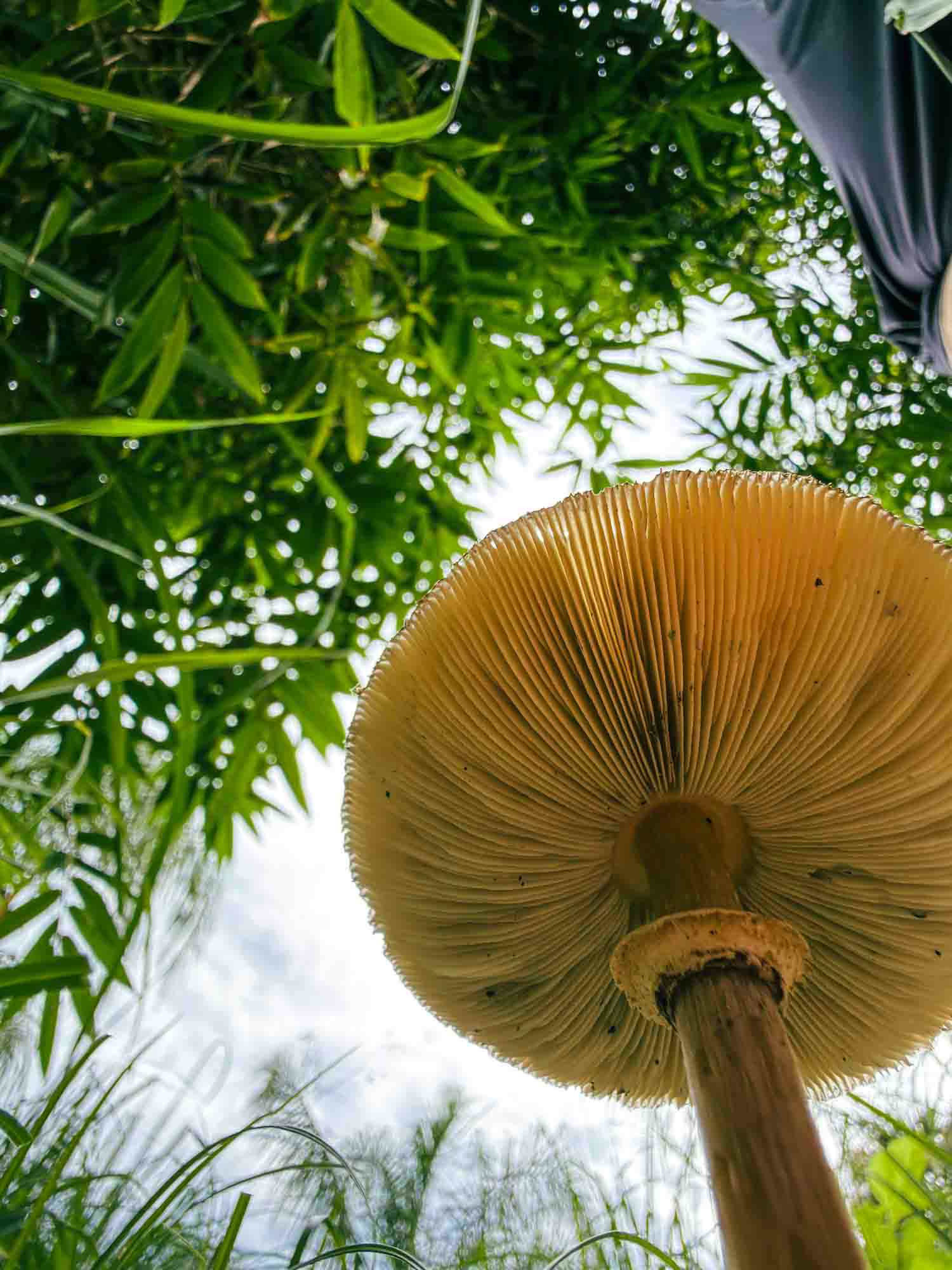
  • March 2026: stinkhorn fruiting body (Phallus sp.) observed — a saprotrophic (wood-decomposing) fungus, evidence of active decomposition and nutrient cycling in the mulch
  • Saprotrophic fungi break down the wood-chip layer, releasing nutrients and building soil organic matter
  • 3 ChipDrop loads placed: May, Jun, Jul 2025 — the substrate this fungal life feeds on
  • ChipDrop (getchipdrop.com) — free wood chips delivered on request when arborists are nearby
  • Note: stinkhorns are decomposers, not mycorrhizal (root-symbiotic) fungi. We have not yet tested for arbuscular mycorrhizal fungi on plant roots, so no mycorrhizal-network claim is made here.

7-Layer Model

Vertical Stack

  • Emergent/Canopy: Avocado, Bamboo, Mango, Date Palm (12m+)
  • High Understory: Moringa, Olive, Mulberry, Allspice (6–10m)
  • Medium Shrub: Banana, Papaya, Fig, Guava (3–6m)
  • Low Shrub: Katuk, Vitex, Pigeon Pea, Lemongrass (1–2m)
  • Ground Cover: Spinach, Pineapple, Everglades Tomato (<0.5m)
  • Vines: Passionfruit, Luffa, Butterfly Pea (vertical)
  • Root/Rhizome: Cassava, Ginger, Turmeric, Galangal (subsurface)
"This is not maintenance. This is succession."
Moody Grove — March 2026

Design Principles

The Philosophy

Syntropic Agroforestry

Core principle: design with ecological succession, not against it. Syntropy means biological systems growing more complex over time.

  • Chop-and-drop builds soil in situ — no external compost needed
  • Dense multi-strata planting mimics natural forest structure
  • N–S row orientation maximizes photosynthetic exposure
  • Pioneer species (Moringa, Tithonia) prepare soil for climax species (Avocado, Mango)
  • System becomes independent of inputs over time
  • At Moody Grove: Tithonia rows seeded Dec 2024, dense layering underway

Permaculture Design

Observe before acting. Stack functions. Use biological resources. Each element serves multiple roles — food, biomass, habitat.

  • Zone design: high-use plants near house, wilderness at edges
  • Stack functions: each plant serves 3+ roles
  • 1 year observation before major changes
  • Edge effect: maximize productive transitions between zones
  • Catch and store energy: water features, biomass cycles, seed saving
  • At Moody Grove: zones A–C planned, W1–W5 water capture, guild planting

Food Forest Design

A food forest mimics the architecture of a natural forest while maximizing edible, medicinal, and support species at every vertical layer.

  • Guild concept: each anchor species surrounded by support plants
  • Guilds reduce pest pressure, fix nitrogen, attract pollinators
  • Perennial system — plant once, harvest for decades
  • Diversity = resilience: 70+ species buffer against any single failure
  • Self-seeding groundcovers replace annual planting labor
  • At Moody Grove: 70+ species, 7 layers, 330 plants in ground
5-Year Development Plan

Grove Roadmap

Journey Progress
Established December 2024 · Target: December 2029
Phase 1 — Foundation & Recovery
2026 NOW
  • Assess and confirm freeze survivors (June deadline)
  • Install Zone A seating + mulched entrance path
  • Zone B apiary — registered online, site visit pending, bees arriving this week
  • Install W1 birdbath/small pond in central clearing
  • Black Pigeon Pea added to grove
  • ChipDrop — on request via getchipdrop.com, delivered when arborists are in the area (ongoing)
Phase 2 — Canopy Closing
2027
  • Moringa, avocado, and mango trees fully established
  • Begin Zone C harvest/workshop station setup
  • Medicinal guild installation (lemon balm, tulsi, ashwagandha)
  • Comfrey planted as deep mineral accumulator / chop-and-drop
  • Bioswale (W3) installed along west driveway edge
Phase 3 — Productive Canopy
2028
  • First significant mango and avocado harvests
  • Begin chop-and-drop rotations at full system scale
  • IBC water storage (W5) installed behind windbreak
  • Mulberry and fig producing consistently
  • Honey harvest from established apiary
Phase 4 — System Maturity
2029
  • Food forest largely self-maintaining between interventions
  • Vanilla planting on established tree supports
  • Surplus harvest available for preservation and trade
  • Moody Grove Substack launched — field notes in progress
Phase 5 — Abundance
2030+
  • Closed-loop system — external inputs near zero
  • Canopy fully closed, creating cool humid microclimate
  • Teaching space — grove open for educational tours
  • Seed/plant swaps with community
  • Substack field notes archive covers full 5-year succession arc
Ormond Beach, FL · 29.29°N 81.06°W · Zone 9b/10a

Grove Climate

Real-time conditions and every day of weather since the grove was established — watching the seasons shape the forest.

Loading current conditions…
Next 7 Days
Forecast for the grove — planning windows for planting, mulching, and harvest
Loading…
Temperature History
Daily min · mean · max since grove establishment · Freeze thresholds · Grove milestones marked
Min/Max range
Mean temp
32°F frost
28°F hard freeze
Monthly Rainfall
Inches per month since grove establishment
Grove Milestones
Key events with weather conditions on that day
Loading…
From soil to table, without asking permission. Tabasco pepper · Moody Grove · July 2026
From the Grove

Grove Apothecary

Bamboo leaf tea, cold brews, and herbal blends grown and harvested at Moody Grove. Every ingredient in the cup comes from within the food forest.

Bamboo leaves from Seabreeze and Oldhamii are rich in a class of C-glycoside flavonoids — orientin, vitexin, isoorientin, isovitexin — that are notably stable compared to other plant antioxidants. Research identifies these compounds as cardiovascular-supportive, anti-inflammatory, and neuroprotective.1

Paired with homegrown turmeric (curcumin + turmerones), fresh ginger (gingerols + shogaols), and Myer's lemon (hesperidin + vitamin C), the result is a synergistic daily tonic where every element reinforces the others — gut, joints, circulation, and immunity.

Hot steeping draws the most flavonoids from dried bamboo leaves. Cold brew concentrates lighter aromatic compounds and makes an excellent refrigerator staple during Florida summers.

Grove Source
Bambusa Species at Moody Grove

The primary tea bamboos at Moody Grove are Seabreeze (Bambusa malingensis) and Oldhamii (Bambusa oldhamii) — the two species specifically studied for their leaf flavonoid content. Both are large-culm windbreak bamboos with mature leaves that dry and brew reliably. Harvest young-to-mid-age healthy leaves, rinse, air-dry or dehydrate at low heat, and store airtight.

All grove bamboos contribute — every Bambusa species shares the same C-glycoside flavonoid class. The cottage garden varieties (Alphonse Karr, Gracilis, Dwarf Buddha Belly) supplement the blend when available, but Seabreeze and Oldhamii are the primary harvest sources given their size, leaf volume, and direct research backing.

What's In the Leaf

Bioactive Compounds

Flavonoid
Orientin
The dominant flavonoid in bamboo leaves. Antioxidant, anti-inflammatory, cardioprotective, neuroprotective, and adaptogenic. More stable than most plant polyphenols — survives drying and brewing.
Flavonoid
Vitexin
Anti-inflammatory and anti-adipogenic (helps regulate fat cell formation). Associated with reduced cardiovascular risk markers and support for metabolic balance. Works synergistically with orientin.
Flavonoid
Isoorientin & Isovitexin
Mirror isomers of orientin and vitexin. Contribute broadly to the antioxidant profile, anti-allergenic activity, and support for gut microbiome diversity in flavonoid-rich diets.
Polyphenol
Rutin
Strengthens capillary walls and supports circulatory health. Pairs well with vitamin C (from Myer's lemon) — the two compounds potentiate each other's bioavailability in the body.
Polyphenol
Quercetin
Broad-spectrum anti-inflammatory. Studied for immune modulation, antihistamine-like effects, and support for respiratory health. Present in modest amounts alongside the dominant C-glycosides.
Mineral
Silica & Potassium
Bamboo is one of the highest plant sources of bioavailable silica, which supports connective tissue, hair, and skin. Potassium content adds mild electrolyte value to the brew.
The Formula

The Moody Grove Blend

🎋
Bamboo Leaves
Windbreak · Seabreeze (B. malingensis) + Oldhamii (B. oldhamii)
The base of the brew. Dried leaves contribute the full flavonoid matrix — orientin, vitexin, rutin, quercetin — plus natural silica. Mild grassy, slightly sweet flavor that pairs well with everything else in this blend.
2 tbsp dried leaves per quart
🌿
Turmeric
In Ground · Curcuma longa
Fresh rhizome from the grove. Curcumin is the most studied natural anti-inflammatory compound known — inhibits NF-κB, the same molecular pathway targeted by many pharmaceutical anti-inflammatories. Turmerones add depth and enhance absorption.
1-inch fresh slice, or ½ tsp dried powder + pinch black pepper
🫚
Ginger
In Ground · Zingiber officinale + Shell Ginger
Grove-harvested ginger delivers gingerols (fresh) or shogaols (dried/heated) — both potently anti-nausea, digestive, and circulatory. Shell ginger (Alpinia zerumbet) adds an aromatic floral note and its own antioxidant profile.
1-inch fresh slice per quart
🍋
Myer's Lemon
In Ground · Citrus × meyeri
Sweeter and less acidic than standard lemon with higher hesperidin (a flavonoid with circulatory benefits) and vitamin C. The ascorbic acid dramatically improves absorption of rutin from the bamboo leaves — the combination is more effective than either alone.
½ lemon squeezed per quart, added after brewing
How to Brew

Two Methods

Hot Infusion · Daily Tonic

Morning Hot Brew

  1. 1Bring water to 195°F (90°C) — just off a rolling boil. Do not use fully boiling water; high heat degrades flavonoids.
  2. 2Add 2 tbsp dried bamboo leaves + 1 thin slice each of fresh turmeric and ginger to an infuser or pot.
  3. 3Steep 8–12 minutes. Longer draws more flavonoids; taste intensifies noticeably past 10 minutes.
  4. 4Strain. Add a squeeze of Myer's lemon after brewing — not during — to preserve vitamin C.
  5. 5Optional: small drizzle of local honey. Pinch of black pepper with the turmeric boosts curcumin absorption ~2000%.
Yield: 1–2 cups · Routine: 1 cup/day, up to 2 cups/day max. Hot brewing extracts the highest flavonoid concentration.
Cold Brew · Summer Staple

Overnight Cold Brew

  1. 1In a 1-quart mason jar, combine 20–25 fresh bamboo leaves (rinsed), 3–4 fresh ginger slices, and 2–3 thin turmeric slices.
  2. 2Fill with filtered water. Seal and refrigerate 12–18 hours.
  3. 3Strain through a fine mesh. The brew will be pale gold with a light grassy-ginger aroma.
  4. 4Squeeze in half a Myer's lemon. Taste — add honey if preferred.
  5. 5Keeps refrigerated 3 days. Serve over ice as a daily summer drink or mix with sparkling water.
Note: Cold brew yields fewer flavonoids than hot infusion but preserves more delicate aromatics and enzymatic compounds. Great for volume and daily enjoyment; rotate with hot brew for full-spectrum benefit.
Also in the Grove

Fig Leaf Tea — Standalone & Blend

Ficus carica · Fig Tree

A Different Compound Profile

Where bamboo leaves lead with C-glycoside flavonoids, fig leaves bring a distinct chemistry: rutin as the primary flavonoid (shared with bamboo — this overlap amplifies the dose), plus psoralen, chlorogenic acid, and triterpenoids not found in bamboo at all.

The most documented benefit is blood glucose regulation — fig leaf has stronger direct clinical evidence here than bamboo, with a controlled crossover trial in insulin-dependent patients showing significantly lower post-prandial glucose during fig-leaf supplementation.4 Combined with bamboo's cardiovascular and anti-inflammatory flavonoids, rotating the two covers more metabolic ground than either alone.

Rutin
Shared with bamboo leaf — capillary strength, circulation. Doubles your rutin intake when blended.
Psoralen
Furanocoumarin with antimicrobial and skin-supporting properties. Light photosensitizing — see note.
Chlorogenic Acid
Slows glucose absorption post-meal. Liver-supportive and antioxidant. Also found in coffee.
Triterpenoids
Anti-inflammatory and potentially anti-tumor activity. Unique to fig — absent in bamboo.
Harvest note: Fresh fig sap and leaf undersides contain latex that can cause phototoxic skin irritation in strong sunlight. Wear gloves when harvesting, rinse leaves well. Dry or lightly wilt before brewing to neutralize the sap. Psoralen in the finished tea at typical serving amounts is well within safe limits.
Standalone · Fig Only

Fig Leaf Hot Brew

  1. 1Use 2–3 dried fig leaves (or 4–5 fresh, wilted). Tear or roughly chop to open the surface.
  2. 2Steep in 195°F water for 8–10 minutes. The brew turns a warm amber-green. Flavor: earthy, mildly sweet, faintly coconut-like.
  3. 3Strain and add Myer's lemon squeeze. The citrus brightens the earthy base considerably.
Best drunk before or with meals — the blood glucose benefit is most active in the 30–60 min window around eating.
Cold Brew · Fig + Bamboo

Fig & Bamboo Cold Brew

  1. 1In a quart jar: 15 fresh bamboo leaves + 2 fresh fig leaves (wilted or dried). Add 2 ginger slices.
  2. 2Cold water, refrigerate 12–16 hours. The fig deepens the color to a richer gold.
  3. 3Strain, add Myer's lemon, serve over ice. The bamboo keeps the flavor clean; the fig adds depth and earthiness.
This is the summer daily driver — lighter than straight fig, broader compound coverage than straight bamboo.
The Color Brewer

Butterfly Pea Flower

Clitoria ternatea · Dried + Powder

Nature's pH Indicator

Butterfly pea is doing something none of the other grove herbs do: it changes color in your cup based on acidity. Steep the dried flowers or dissolve the powder and the brew is a deep indigo blue. Add a squeeze of Myer's lemon and watch it shift through violet to magenta-pink in real time — pure anthocyanin chemistry.

Beyond the visual, the ternatins — a class of polyacylated anthocyanins unique to this plant — are among the most structurally complex antioxidants found in any common garden plant. Research links them to eye health, cognitive function (acetylcholinesterase inhibition, the same enzyme targeted by Alzheimer's medications), anti-diabetic activity, and anti-tumor potential.

Ternatins
Polyacylated anthocyanins unique to this species. Potent antioxidant, neuroprotective, anti-inflammatory. More structurally complex than typical anthocyanins.
Delphinidin Glucosides
The blue pigment base. Eye health, retinal support, cardiovascular protection. Also responsible for the pH color-shift chemistry.
Kaempferol
Anti-inflammatory flavonol, also found in trace amounts in bamboo leaf. Adds to the cumulative antioxidant stack when blended.
Acetylcholinesterase Inhibition
Extracts slow breakdown of acetylcholine — the neurotransmitter for memory and learning. Traditionally used as a memory tonic in Ayurveda.
Neutral pH Deep indigo blue — straight from the flower or powder
+ a few drops Violet purple — first acid contact
+ Myer's lemon Magenta pink — full squeeze, warm acid
Powder form: Dissolve ½ tsp in warm water before adding other ingredients for the most vivid color. The grove-dried powder retains full ternatin activity — low-temp drying preserves more anthocyanin than heat.
Standalone · Hot or Cold

Butterfly Pea Brew

  1. 1Hot: steep 8–10 dried flowers in 195°F water for 5–7 min. Cold brew: 15–20 flowers per quart, overnight in fridge. Powder: ½ tsp dissolved in 8 oz warm water.
  2. 2The brew pours brilliant blue. Taste is mild and slightly earthy — neutral on its own, designed to blend.
  3. 3Add lemon balm or lemongrass for aroma. Add Myer's lemon at the end for the color shift. Honey optional.
The color-shift moment is striking enough to serve to guests as a talking point. Pour into a glass, hand them the lemon half, and let them squeeze it themselves.
Cold Brew Blend · Blue → Pink

Grove Sunset Cold Brew

  1. 1Mason jar: 20 butterfly pea flowers + 2 stalks fresh lemongrass (bruised) + 10 fresh spearmint leaves + 2 lemon verbena sprigs.
  2. 2Cold water, refrigerate 10–14 hours. Strain — deep blue with a citrus-mint aroma.
  3. 3Serve over ice and let guests squeeze in half a Myer's lemon. Blue shifts to violet, then pink before their eyes.
Every ingredient in this glass grows at Moody Grove. Zero inputs from outside the forest.
The Rhizome Vault

Five Turmeric Varieties

Most people have access to one type of turmeric — yellow powder from a jar. Moody Grove grows five distinct Curcuma species, each with a different internal color, a different compound signature, and different traditional applications. Together they cover a pharmacological range no single variety can match.

5
Curcuma Species
Yellow · Black · Blue · White · Green — each a different internal color and compound profile
Why variety matters

Yellow turmeric's curcumin is well studied. But Black turmeric's camphor-rich essential oils, White turmeric's curcumenol (a different sesquiterpene entirely), and Mango Ginger's amadaldehyde represent compound classes that curcumin research doesn't cover. Blending varieties in the cup gives you phytochemical breadth that no single-origin turmeric product delivers.

Yellow Turmeric
Curcuma longa · Standard
The anchor. Curcumin (3–5% of dry weight) is one of the most-studied natural anti-inflammatory compounds — inhibits NF-κB, COX-2, and a cascade of pro-inflammatory cytokines. Warm, earthy, peppery. The base for most apothecary brews.
⚑ Key compounds: curcumin, bisdemethoxycurcumin, ar-turmerone · Boost absorption: always pair with black pepper (piperine +2000%) and a fat
Black Turmeric
Curcuma caesia · Rare
The rarest in the collection — bluish-black flesh inside. High anthocyanin content (same pigment family as butterfly pea) plus camphor, ar-turmerone, and (Z)-ocimene. Studied for anti-ulcer, neuroprotective, anticancer, and antidiabetic properties. Reverentially used in Indian Ayurveda and tribal medicine.
⚑ Key compounds: anthocyanins, camphor (28%), ar-turmerone, bisacurone · Use sparingly — potent, complex aroma
Blue Turmeric
Curcuma caesia / aeruginosa · Rare
Related to Black turmeric but with a distinct blue-grey interior hue. Essential oils lean toward anti-inflammatory sesquiterpenes. Traditional Ayurvedic use for joint pain, respiratory conditions, and as a nerve tonic. Visually striking when grated — the blue color fades with heat.
⚑ Key compounds: sesquiterpene ketones, germacrone, camphor · Best used fresh in cold brew to preserve color
White Turmeric
Curcuma zedoaria · Zedoary
White to pale cream flesh, camphor-forward aroma. Star compound is curcumenol — a sesquiterpene with anti-tumor (especially liver), antifungal, and liver-protective properties not found in yellow turmeric. Also strongly antimicrobial against Candida and Aspergillus. Traditional digestive and circulatory herb in TCM and Ayurveda.
⚑ Key compounds: curcumenol, furanodienone, zederone · Distinct from other Curcuma — different mechanism, different target
Green Turmeric
Curcuma longa variant / early harvest
Green-fleshed turmeric — either a specific green-interior cultivar or Curcuma longa harvested before the rhizome fully matures. Young rhizomes carry a fresher, more citrus-forward volatile oil profile and higher moisture content. Milder curcumin level than mature yellow, but strong in fresh aromatic turmerones. Excellent raw in cold brew.
⚑ Use fresh: thin-slice into cold brew for a lighter, more aromatic turmeric profile. Not ideal for drying — the green color comes from chlorophyll that breaks down with heat.
The Ginger Guild

Twelve+ Varieties Across Four Genera

The grove's ginger collection spans four botanical families within Zingiberaceae — true gingers (Zingiber), shell gingers (Alpinia), wild gingers (Curcuma/Boesenbergia), and spiral gingers (Costus). Each genus has its own lead compound. Together they form a phytochemical toolkit that rivals a well-stocked apothecary.

Zingiber
True Gingers
Lead compounds: gingerols (fresh) → shogaols (dried/heat). Anti-nausea, anti-inflammatory, circulatory.
Common Ginger
Zingiber officinale
The workhorse. Gingerols (fresh) are potent anti-nausea, anti-inflammatory, and circulatory compounds. Shogaols (formed when dried or heated) are 2–4× more bioactive and have demonstrated anti-tumor properties against multiple cancer cell lines. One of the most clinically studied medicinal plants in the world.
Panduratin → no. Gingerols + [6]-shogaol → yes. Anti-nausea, digestion, joint inflammation.
Best: 1-inch slice fresh in any hot brew. Dry + grind for powder storage.
Shampoo Ginger
Zingiber zerumbet
Distinctive cone-shaped flower heads that fill with fragrant liquid as they mature — the traditional hair wash. Medicinally, the rhizome contains zerumbone, a sesquiterpene with significant anti-cancer, anti-inflammatory, and antiparasitic activity studied extensively in Southeast Asian research. Flavor is sharper and more camphor-like than common ginger.
Lead compound: zerumbone (anticancer, anti-inflammatory, antiparasitic). Unique to this genus.
Best in hot brew — zerumbone extracts well with heat. Use half the amount of common ginger (more pungent).
Alpinia
Shell Gingers & Galangals
Lead compounds: galangin, ACA (1'-acetoxychavicol acetate), antihypertensive peptides. Cardiovascular, antifungal, antiviral.
Thai / Greater Galangal
Alpinia galanga
The galangal in Thai cooking. Its lead compound ACA (1'-acetoxychavicol acetate) has demonstrated potent anticancer activity — one of the most studied natural anti-tumor compounds in Asian research. Also strongly antifungal and antiviral. Sharper, more piney flavor than common ginger; can't be substituted by it in a recipe.
ACA → anticancer, antifungal, antiviral. Galangin → anti-inflammatory, xanthine oxidase inhibition (gout support).
Best used fresh, thin-sliced, in cold brew or added to hot brews in the final 3 min. Heat degrades ACA.
Shell Ginger / False Cardamom
Alpinia zerumbet
The ornamental pink-white shell flowers are just the surface. Leaf tea and rhizome both contain antihypertensive peptides — some of the strongest plant-based blood pressure support compounds outside of pharmaceuticals. Diuretic and antioxidant. The aroma is a cardamom-floral hybrid that makes it one of the most pleasant additions to cold brews.
Antihypertensive peptides + kavain. Blood pressure, diuretic, antioxidant. Leaves can be brewed too — not just the rhizome.
Fresh leaves (3–4) + sliced rhizome in cold brew. The floral aroma is strongest cold.
Pink Perfection
Alpinia hainanensis
Chinese medicine galangal from Hainan. Related to shell ginger with a slightly different aromatic profile — warmer, spicier. Traditional use as a warming digestive, blood circulation support, and pain reliever. Beautiful in the landscape; the rhizome is smaller and more concentrated than Greater Galangal.
Flavonoids, essential oils, warming circulatory compounds. Traditional warming digestive and pain reliever.
Treat like shell ginger — fresh in cold brew, or use the rhizome sparingly in hot brews.
Boesenbergia & Curcuma amada
Fingerroot & Mango Ginger
The unusual two. Each has a unique lead compound found almost nowhere else in the plant kingdom.
Fingerroot (Chinese Keys)
Boesenbergia rotunda
Multiple finger-like rhizomes — the "keys" shape. Lead compound panduratin A is one of the most exciting compounds in recent antiviral research: demonstrated inhibitory activity against SARS-CoV-2 in a high-content cell-based screening study,2 anti-HBV (hepatitis B virus), and anti-cancer activity. Used in Thai and Malaysian cuisine — slightly bitter, citrusy, complex.
Panduratin A → anti-SARS-CoV-2, anti-HBV, anticancer, anti-inflammatory. Studied at Nature journal level. Rare to have this growing in a home garden.
Best fresh, thinly sliced. Use conservatively — strong flavor. Excellent paired with lemongrass in cold brew.
Mango Ginger
Curcuma amada
Looks like turmeric, smells unmistakably like raw mango — one of the most startling sensory surprises in the ginger family. No curcumin-style pigment. Instead: amadaldehyde, amadannulen, and enterokinase — a digestive enzyme that breaks down proteins. Antioxidant, anti-inflammatory, antifungal, and antiallergic. Used in Indian Ayurveda as an appetizer and digestive.
Amadaldehyde (unique), enterokinase enzyme (protein digestion), antifungal, antidiabetic pathway via GSK-3β/Nrf2. Impossible to replicate with any other ingredient.
Fresh only — the mango aroma disappears entirely with heat. Grate into cold brew alongside lemon verbena. A genuine conversation-starter in the cup.
Costus
Spiral Gingers
Technically Costaceae, not Zingiberaceae — a separate family that shares the rhizomatous tropical habit. Traditional medicinals across Africa, Asia, and the Americas.
Spiral Orange
Costus barbatus
Tall spiral-stemmed plant with striking orange cone flowers. The Costus genus has a long history in traditional medicine across Africa, Asia, and the Americas — diuretic, anti-diabetic, antifungal, and used for respiratory conditions. The leaf juice is used topically and the stems/rhizomes are chewed for digestive support. Bold architectural plant; rhizome is milder than true ginger.
Costunolide, diosgenin (steroidal saponin — anti-inflammatory, hormonal), antifungal oils. Traditional anti-diabetic herb.
Mild and slightly sweet in hot brew. Can blend a slice of rhizome with common ginger to round out the spice edge.
Spiral Red
Costus comosus
Similar to Costus barbatus with a red flower cone. Traditional use across Latin America (the genus is native to the Americas as well as Asia) for pain, inflammation, and kidney support. Shares the costunolide and diosgenin profile with related Costus species. The fresh rhizome has a subtle sweetness with none of the heat of true ginger.
Related profile to Spiral Orange — costunolide, saponins, anti-inflammatory, mild diuretic.
Same use as Spiral Orange. Gentle enough for evening brews when you want warmth without pungency.
Costus (Reid Farm)
Costus sp.
New addition from Reid Farm — exact species to be confirmed as it matures. Likely a local Florida-adapted Costus selected for Zone 9b vigor. Will share the genus's broad traditional medicinal profile while potentially offering slightly different aromatic characteristics depending on the cultivar.
To assess as plant matures. Watch for flower color and leaf pattern to confirm species.
Trial in cold brew once established — start with a small slice to gauge flavor and aroma.
Supporting Cast

Grove Herb Blenders

These five grove herbs don't anchor a brew on their own — they finish it. Add one or two to any base (bamboo, fig, butterfly pea) to layer aroma, shift the flavor direction, and stack more compound coverage.

🌿
Spearmint
Mentha spicata
Gentler than peppermint — carvone rather than menthol gives it a softer, sweeter mint. Rosmarinic acid adds anti-inflammatory action. A randomized, double-blind trial of a rosmarinic-acid-rich spearmint extract showed improved working memory in older adults with age-associated memory impairment;3 spearmint also has mild anti-androgenic properties. Digestive and calming.
Add: 6–8 fresh leaves per cup, last 2 min of steep or cold brew. Pairs especially well with butterfly pea and bamboo.
🌱
Lemongrass
Cymbopogon citratus
High in citral — a blend of geranial and neral — the primary citrus aromatic. Antimicrobial, digestive, and mild anxiolytic. Strong flavonoid content including luteolin and apigenin. One of the best carriers in the grove: it lifts any blend without dominating it.
Add: 1–2 stalks bruised per quart cold brew, or add 2 inches sliced to any hot steep for the final 3 minutes.
🍃
Lemon Balm
Melissa officinalis
The calm herb. Rosmarinic acid (anti-inflammatory, antiviral), citral, and luteolin. Clinical evidence for reducing stress and anxiety, improving sleep quality, and reducing C-reactive protein. Also shows antiviral activity against herpes simplex. Antioxidant activity comparable to green tea.
Add: 4–6 fresh leaves or 1 tbsp dried. Best blended with bamboo as an evening tonic — the calming profile pairs with bamboo's anti-inflammatory base.
🌾
Lemon Verbena
Aloysia citrodora
The most intensely lemon-scented of the group — verbascoside (a phenylpropanoid) is its star compound, shown to reduce C-reactive protein in clinical trials. Also rich in geranial, luteolin, and catechins (same family as green tea). Muscle recovery and anti-fatigue properties in exercise research.
Add: 2–3 fresh sprigs per quart — it's potent, less is more. Excellent cold brew partner for butterfly pea; the citrus-floral aroma amplifies without competing.
🌿
Other Mints
Mentha spp.
Depending which varieties are in the grove — peppermint, chocolate mint, apple mint — each brings a different menthol/carvone ratio and aromatic character. All share rosmarinic acid and anti-inflammatory phenolics. Peppermint is the strongest (use half); apple mint and chocolate mint are lighter and sweeter.
Add: same as spearmint — small amounts, late in the brew process. Best used fresh rather than dried for full aromatic impact.
Mix & Match

Blend Combinations

Bamboo-Forward

Daily Antioxidant

Bamboo 100% · Turmeric · Ginger · Lemon

The core Moody Grove tonic. Highest orientin/vitexin load. Best for cardiovascular support, anti-inflammation, and steady antioxidant maintenance. Hot brew extracts the most flavonoids.

Best for: daily baseline · morning routine · anti-inflammatory focus
Fig-Forward

Metabolic Support

Fig Leaf 100% · Myer's Lemon · optional Cinnamon

Strongest blood glucose and digestive support. Drink with or just before a meal for the most impact. The clinical evidence base for fig leaf on postprandial glucose spikes is more direct than bamboo.

Best for: with meals · blood sugar balance · digestive support
Bamboo + Fig Blend

Full-Spectrum Grove Brew

70% Bamboo · 30% Fig · Turmeric · Ginger · Lemon

The broadest coverage: bamboo's C-glycoside flavonoids + fig's triterpenoids, chlorogenic acid, and psoralen. Rutin is amplified (both leaves carry it). Bamboo keeps the flavor clean; fig adds earthiness and depth. Best as a hot brew — cold brew works but fig needs more time.

Best for: full-spectrum daily use · maximum compound variety · flavor complexity
Rotation Protocol

Alternate Week to Week

Mon–Fri Bamboo blend · Weekend Fig blend

Rather than blending every day, rotate which leaf is leading. Avoids building tolerance to any single compound pathway, ensures the body gets distinct phytochemical profiles across the week, and lets you track how each makes you feel independently.

Best for: long-term practice · comparing effects · variety without overthinking
Butterfly Pea Featured

Grove Sunset

BPF + Lemongrass + Spearmint + Lemon Verbena + Myer's Lemon

The all-grove color brew. Every ingredient comes from Moody Grove. Stunning served cold — deep blue that shifts to pink when guests squeeze in their own lemon. Entertaining-ready, grove-story in a glass.

Best for: guests · hot Florida afternoons · showing off the grove
Evening Wind-Down

Blue Calm

BPF + Bamboo Leaf + Lemon Balm + Spearmint

Butterfly pea's neuroprotective ternatins + bamboo's anti-inflammatory flavonoids + lemon balm's proven anxiolytic and sleep-support properties. Mild and calming. Serve hot in the evening — the blue color in the cup is its own kind of quiet.

Best for: evenings · stress wind-down · sleep prep
🌿
A note on safety and moderation. The cyanogen concern in bamboo applies specifically to raw shoots, not mature leaves — mature leaves are the part studied extensively for their polyphenol content and functional food applications. Harvest only healthy, unsprayed leaves and rinse before use. Recommended intake is 1 cup/day for routine use, up to 2 cups/day as a conservative maximum. Long-term clinical dosing data for home-brewed bamboo leaf tea remains limited, so moderation is appropriate. Rotate with other herbal teas rather than drinking exclusively. Consult your physician if pregnant, nursing, or taking medications.
Sources

References & Methodology

Specific pharmacological and design claims on this page are cited to primary literature below. Where a claim reflects traditional or preliminary preclinical evidence rather than a controlled human trial, that is noted. Nothing here is medical advice.

  1. Yang J-P, He H, Lu Y-H, et al. Multitasking bamboo leaf-derived compounds in prevention of infectious, inflammatory, atherosclerotic, metabolic, and neuropsychiatric diseases. Pharmacology & Therapeutics, 2022. sciencedirect.com Cited for: bamboo-leaf C-glycoside flavonoids (orientin, vitexin, isoorientin, isovitexin) — cardiovascular, anti-inflammatory, neuroprotective activity.
  2. Kanjanasirirat P, Suksatu A, Manopwisedjaroen S, et al. High-content screening of Thai medicinal plants reveals Boesenbergia rotunda extract and its component Panduratin A as anti-SARS-CoV-2 agents. Scientific Reports 10, 19963 (2020). nature.com Cited for: panduratin A (fingerroot / Boesenbergia rotunda) SARS-CoV-2 inhibition in a cell-based screen. Note: in vitro (Vero E6 cell) study, not a clinical trial.
  3. Herrlinger KA, Nieman KM, Sanoshy KD, et al. Spearmint Extract Improves Working Memory in Men and Women with Age-Associated Memory Impairment. J Altern Complement Med. 2018;24(1):37–47. liebertpub.com Cited for: rosmarinic-acid-rich spearmint extract and working memory. Randomized, double-blind, placebo-controlled (n=90).
  4. Serraclara A, Hawkins F, Pérez C, et al. Hypoglycemic action of an oral fig-leaf decoction in type-I diabetic patients. Diabetes Res Clin Pract. 1998;39(1):19–22. pubmed.ncbi.nlm.nih.gov Cited for: fig-leaf (Ficus carica) decoction lowering post-prandial glucose. Controlled crossover trial in insulin-dependent patients.
  5. Götsch E. Break-through in Agriculture. Rio de Janeiro: AS-PTA, 1995. See also Agenda Gotsch: agendagotsch.com Cited for: attribution of syntropic / successional agroforestry to Ernst Götsch.
  6. Mollison B, Holmgren D. Permaculture One. Melbourne: Transworld, 1978. Holmgren D. Permaculture: Principles & Pathways Beyond Sustainability. 2002. Cited for: attribution of permaculture design to Mollison & Holmgren.
  7. Magurran AE. Measuring Biological Diversity. Oxford: Blackwell, 2004. Cited for: interpretation of Shannon H′ — typical range 1.5–3.5, values above ~4 rare and characteristic of the most diverse tropical systems.

Other compound and traditional-use notes in the Apothecary (e.g. butterfly-pea ternatins, black-turmeric constituents, lemon-balm anxiolytic and antiviral activity, fingerroot gingerols/shogaols) reflect ethnobotanical use and emerging preclinical research and are not individually cited in this pass. They should be read as traditional-use information, not clinical guidance.

Come back in a season. It won't look the same. Garden seating area · Moody Grove · July 2026